Usage-based pricing for robot workers
You pay for the work the robot does, by the hour on palletizing and depalletizing and by the pick on case pick and each pick. From $14 an hour, with nothing to buy and no long-term contract.


Funded by your existing operating budget
Robot hours and robot picks are an operating expense, on the same line as the labor they stand in for. There is no capital request to write and no committee to get through, so a site can fund a robot the way it funds a shift.

Payback in days or weeks
You pay for the work as the robot does it, starting with the first shift it runs. That puts payback on the scale of days and weeks, rather than the years a purchased machine takes to depreciate.

No commitment
Your business will keep changing, so your workforce has to as well. With no long-term contracts, you can scale your robot fleet up for a season and back down after it.
Flexible usage-based pricing for instant ROI
Pricing that matches and beats today's operational accounting.
Palletizing · Depalletizing
Hourly pricing
$14–18
per robot-hour
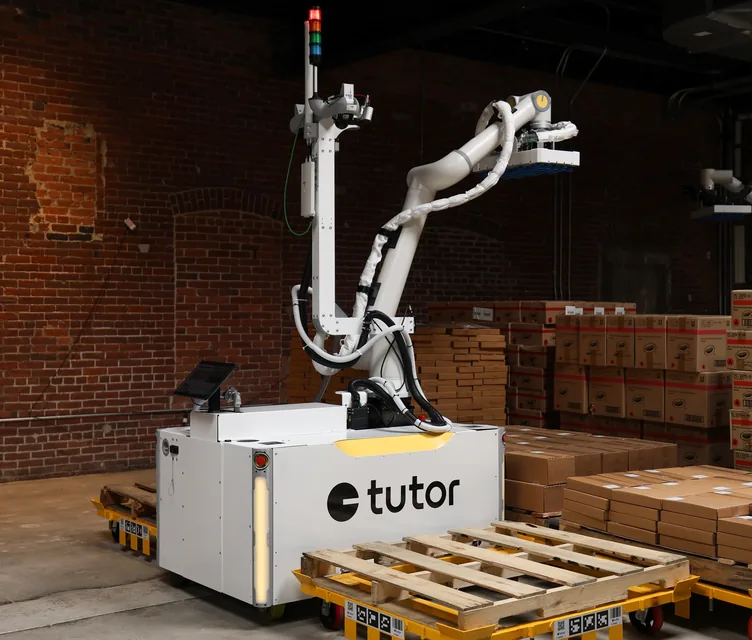
Cassie works your end of line, and you pay for the hours it runs. The rate is all-in: support, maintenance, and every model improvement we ship.
Minimum 80 hours per month, $8K refundable deposit and $10K flat implementation.
Case pick · Each pick
Per-pick pricing
10–50%
below your cost per pick
A fleet works your aisles, and you pay for the picks it makes. We quote a cost per pick by simulating your volume and the calculator below puts a number on it.
Calculate ROI for robotic palletizing
Input your facility's details to see potential savings and ROI.
For a more detailed breakdown of how Cassie can transform your business, please check the email address you provided for the full report
Your estimated picking savings
Picking is already measured in cost per pick, so that is how we price it. Tell us what a pick costs you today and we quote a rate under it, which means the savings start with the first order the fleet fills.
These are estimates, not committed pricing. What we can quote depends on your specific workflow and your facility layout, so get in touch and we will price the job for you.
Rather own the robot?
Most customers pay for usage, and that's the model we'd point you to first: it keeps the risk with us. But Cassie can also be purchased outright by Tutor customers, with a low-cost annual service plan behind it and the same support, maintenance, and model improvements as every other robot in the fleet. Talk to us and we'll price it for your operation.
Build your robot workforce in three steps
01
Consultation
02
Deployment
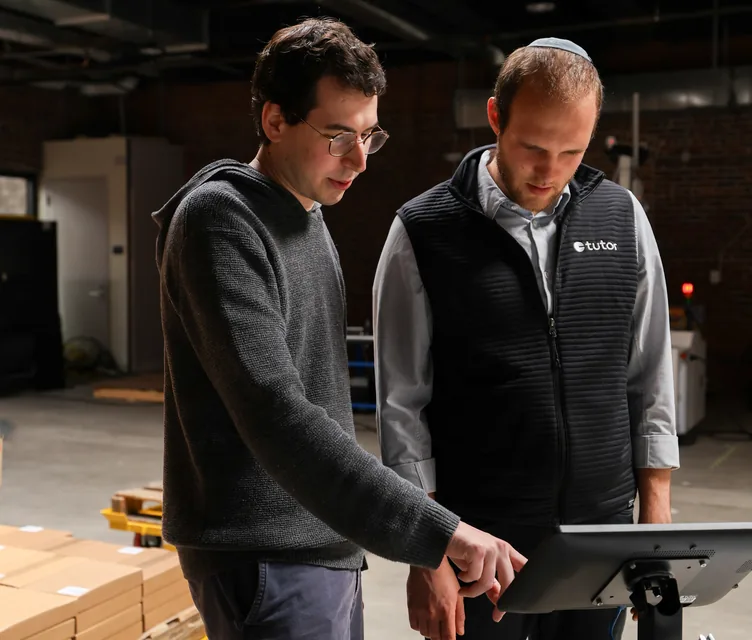
A dedicated deployment manager runs the project with you, getting your robots live about forty days from signing.
03
Go live & scale
Common questions
Palletizing and depalletizing are priced by the hour, $14 to $18 per robot-hour with a minimum of 80 hours a month. Case pick is priced per pick, at 10% to 50% below what a pick costs you today. Either way the rate is all-in: support, maintenance, and every model improvement we ship.
Robots as a service (or RaaS) takes a lump capital expenditure and splits it into monthly or annual payments, lowering the bar to entry for automation. However, RaaS usually comes with long-term contracts and flat rates that only make sense for the most consistent, high-runtime processes. Tutor builds on RaaS with true usage-based pricing: customers pay only for what they run (by the hour or the pick), with no contract lock-in and savings that match your utilization.
A flat $10,000 implementation fee, whatever number of robots you start with. Freight from our Watertown headquarters runs $1,000 to $3,500. There is a refundable $8,000 security deposit, and end-of-line readiness components run $50 to $300 per line depending on the site. That is the whole list.
Tutor records robot hours as billable when operators choose to start a job on the robot's tablet interface. Time in jobs is billed to the fraction of a second, and jobs time out after up to an hour of robot idle time. Customers are not billed if their line isn't running (beyond our minimum of 80 hours a month).
No. Terms are month to month, at will. You control when the robot runs and you pay only when it does, so you can scale up for a season and back down after it. We would rather earn your business every month than lock you into a year of it.
Usage-based pricing frees up to hundreds of thousands of dollars of capital to invest in other projects. Sites often save 80% or more over the capital cost of traditional automation, with hardware and software updates included to ensure your system is always equipped with the latest technology.
Tutor customers can purchase a robot from Tutor, subject to conditions and an annual fee to ensure the same upgrades and service as usage-based customers. Tutor encourages usage-based pricing as an easy way to get started with our robots that is often less expensive over the robot lifetime than a capital purchase.
One. We recommend starting by completely automating one process in one facility: for example, end of line palletizing in one of your sites. This minimizes change management effort and ensures a strong ROI on day one while starting small to build a relationship over time.
We quote a cost per pick by simulating your volume. What we can quote depends on your specific workflow and your facility layout, so get in touch and we will price the job for you.
The median is about forty days from signing to robots in production, run by a dedicated deployment manager. The install itself is short: a palletizing robot is typically running in production about two days after it arrives, and a case-pick fleet is working in under two weeks.
No. Our remote operations team watches every robot around the clock and our own technicians handle every repair, so a robot that needs work gets swapped rather than serviced on your line. Your team supplies empty pallets and takes finished ones away, the same as they do today.
Our technicians handle it, not yours. A robot that needs work gets swapped rather than serviced on your floor, and your whole team, from line workers to mechanics, has 24/7 access to our engineers in the meantime.
Ready to put a robot to work?
Let's talk through your operation and figure out the right fit. The consultation is free and there's no obligation.
