.avif)
Video: DF1 consists of 100 of our own Sonny robots that learn and improve over time.
In this post: The Short Version, The Big Picture, DF1: The Data Factory, Ti0: Trained on DF1, Next Steps
For more technical details on DF1 and Ti0, please see our extended technical report.
The Short Version
Humans manipulate the physical world with intuition backed by millions of years of evolution. How do we give robots that same intuition so they can work alongside us?
One answer: send them to Kindergarten. To us, that means building a large-scale on-robot data collection fleet and an efficient, scalable dataset curation platform, to create an industrially viable real-world data generation machine: DF1.
The Big Picture
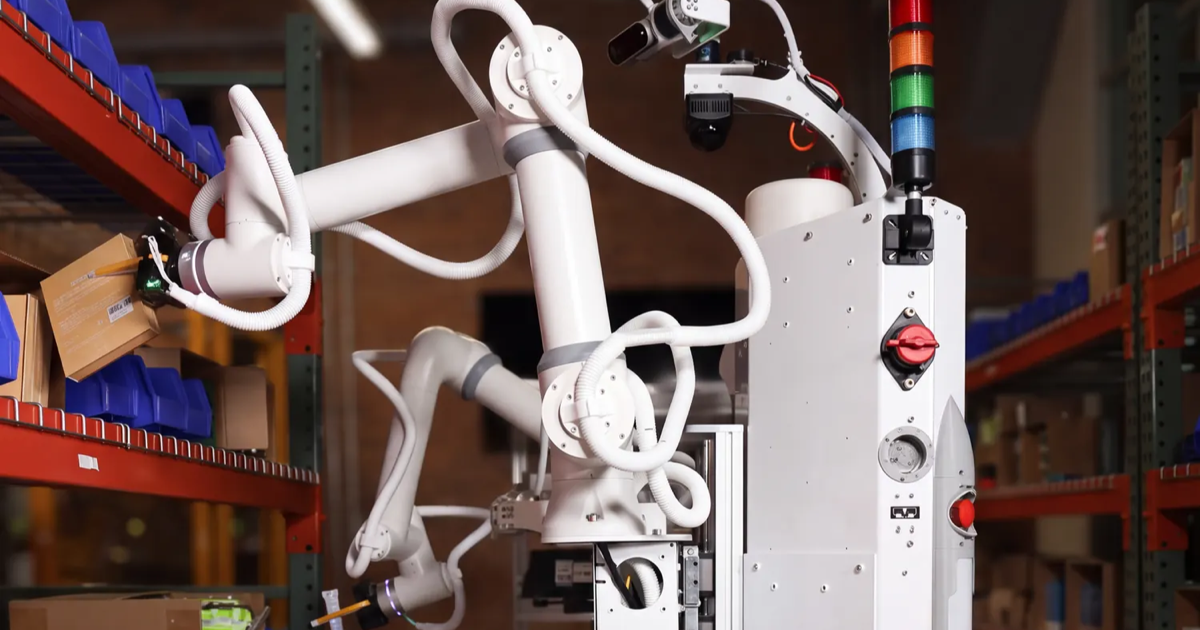
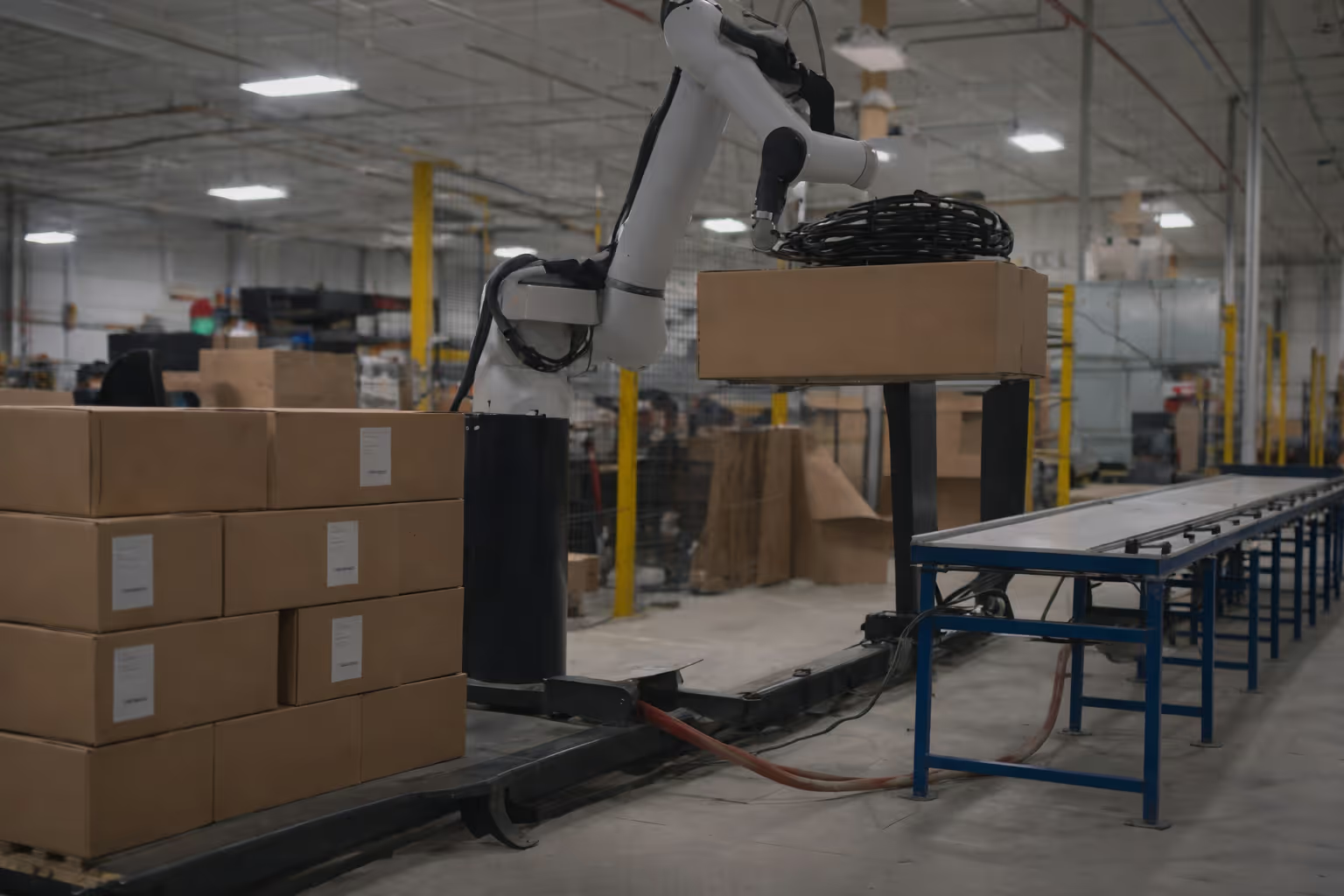
Tutor's mission is to proliferate generally intelligent robotics for the common good. We pursue this by deploying fleets of robots into real-world, economically valuable applications, supervised and taught by Tutors: our remote staff who teleoperate robots through new tasks and help them recover from errors. As deployments scale, our Tutors impart more demonstrations and corrections to more robots, and the resulting data trains policies that make every robot in the fleet more capable over time. Our first embodiment, “Cassie,” runs manufacturing and logistics workflows for customers ranging from small family-owned factories to Fortune 50 distributors across the United States.
Today we're introducing Data Factory 1 (DF1) — to our knowledge the largest robot data factory in the United States — and Ti0, our first vision-language-action model trained on DF1 data. DF1 is a 100-robot fleet of our “Sonny” (semi-)humanoid embodiment that enables large-scale real-world teleoperation, evaluation, and online iterative improvement of robot foundation models for dextrous bimanual manipulation. Ti0 belongs to a new class of methods where the process of robot improvement is not curated by researchers, but instead driven autonomously via large-scale human supervision over deployed robot fleets.
Through DF1 and Ti0, our goal is to bootstrap the world’s first commercial humanoid deployment flywheel on the Sonny platform, unlocking compounding policy improvement and real-world value over time. For more technical details on DF1 and Ti0, please see our extended technical report.
DF1: The Data Factory
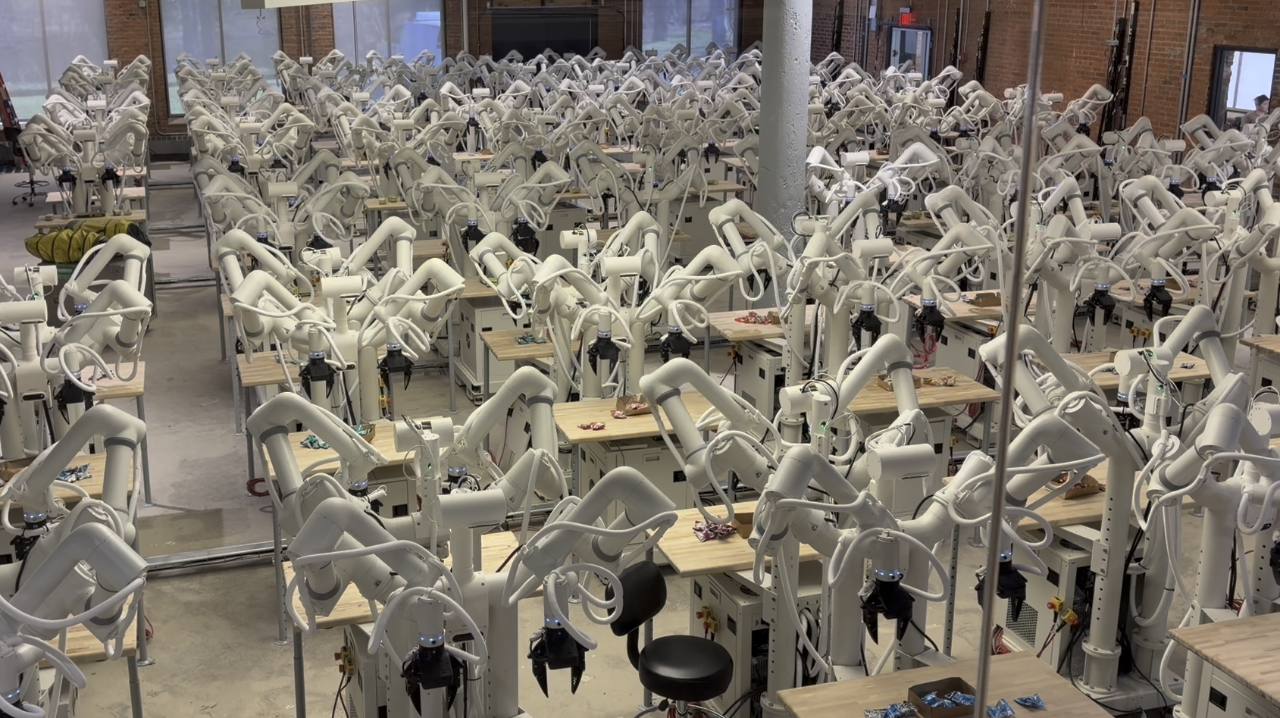
DF1 is a fleet of 100 Sonny robots, organized as a data factory for fleet-scale real-world robot data collection and policy improvement, remotely supervised by our international Tutor team. This team uses remote VR proprioceptive teleoperation (PTeleop) to demonstrate and correct robot behaviors, covering the complete lifecycle of real-world data generation and model training from initial behavior cloning to post-training with supervised fine-tuning and reinforcement learning.
Video: Teleoperated, 1x speed demonstrations.
Video: Top: Proprioceptive Teleoperation Interface. 1x speed. Bottom: 2D Teleoperation Interface. 1x speed
The Sonny embodiment uses the same collaborative robot hardware, sensor stack, electrical stack, and contract manufacturing supply chain as our deployed Cassie embodiment, a critical prerequisite for us to achieve high robot availability and data throughput.
.png)
Ti0: Trained on DF1
Our first model trained via fleet-scale robot data collection at DF1 is Ti0, a Vision-Language-Action (VLA) model. While trained on only a small number of DF1 data hours, Ti0 is unique in its use of methods that leverage or grapple with large-scale human supervision over robot fleets.
Video: We train policies through human intervention. We interrupt model rollouts after mistakes, and human teleoperators demonstrate the correct actions.
Ti0 is trained not only from initial task demonstration data but also corrections from robots’ own mistakes. By evaluating the same policy across all 100 robots, we are able to detect and correct robot behaviors 100x faster: an edge case that may normally require 8 hours of robot operation to notice will be visible in only 5 minutes of DF1 operation. This rapidly accelerates the rate at which models can be retrained to correct their mistakes.
.png)
Minutes after robots complete their tasks in DF1, episodes of robot rollouts are scored by our Tutors to provide positive or negative feedback on the robot’s behavior. This feedback both ensures quality of data collection over time and serves as reward supervision for directly improving robot policy behavior. This reward is used in the post-training process to accentuate favorable robot behaviors and down-weight low-quality behaviors.
Video: Our reward trajectories from human feedback combine the various data annotations to assign terminal reward and do reward shaping. The top curve shows a high quality demonstration (faster and more precise) with higher terminal reward and more aggressive slope than the low quality demonstration below.
Operating a large robot fleet with a large team of teleoperators also makes consistency of demonstrations a key issue when training models. Ti0 is trained with velocity normalization, a novel preprocessing method that aligns the speed profiles of demonstrations across different teleoperators, reducing a major source of inconsistency in fleet-scale data.
Put together, learning from Tutor interventions, reward from Tutor offline feedback, and velocity normalization are a step towards policies that can learn and improve through scaled operational processes, providing a path towards autonomously compounding model improvement.
Video: Examples of Ti0 performing manipulation tasks autonomously at 2x speed
Next Steps
We are just getting started. Ti0 was trained on less data than DF1 can produce in a week, and represents our very earliest robot policies. Over the next few months, we expect to use DF1 to train increasingly capable policies while working toward initial deployment of the Sonny platform with our industrial partners.
If you're interested in working on problems like these, we'd love to hear from you. We're a small, talent-dense team of highly motivated individuals working collaboratively to build economically valuable robot workers. Please apply to any of our open roles: tutorintelligence.com/careers.
If you're a business interested in deploying Cassie or Sonny in your factory or warehouse, request an intro at tutorintelligence.com or email sales@tutorintelligence.com.